
Remember the simple thrill of a game of marbles? Those tiny, gleaming spheres have captivated children for generations, turning schoolyards into arenas of skill and strategy. Today, we’re taking a nostalgic trip back to explore some of the old marble games kids used to play. From the classic “Ringer” to the more obscure “Boss-out,” these games were not just fun; they were an avenue to developing fine motor skills and learning basic physics. In this post, we’ll dive into the rich history and rules of traditional marble games, offering a comprehensive guide that reconnects modern audiences with these timeless pastimes. Whether you’re looking to share a piece 5of your childhood with your kids or just curious about these historical games, you’re in the right place. Get ready to rediscover the charm and challenge of these fascinating games.

This page contains affiliate links, which means I may earn a small commission at no extra cost to you. As an Amazon Associate, I earn from qualifying purchases.
Introduction To Marbles
Just like a game of baseball can’t really start until everyone has learned the basics of throwing, catching, and hitting a baseball with a bat, it’s important to get familiar with your materials before you play. So before you start a game with your kids, let them get their hands on the marbles and practice different techniques of “throwing” or “bowling” the marbles themselves. Letting them master their coordination a little can eliminate frustration when learning the rules of a game.
What You Need To Play Marbles
- A Bag Of Marbles
- A Cleared Play Area
Jump Ahead To:
- Marble History
- Marble Dictionary
- Shop Marbles
- Shooting Techniques
- Frequently Asked Questions
- Marble Games (How To Play)
- Marble Tournaments
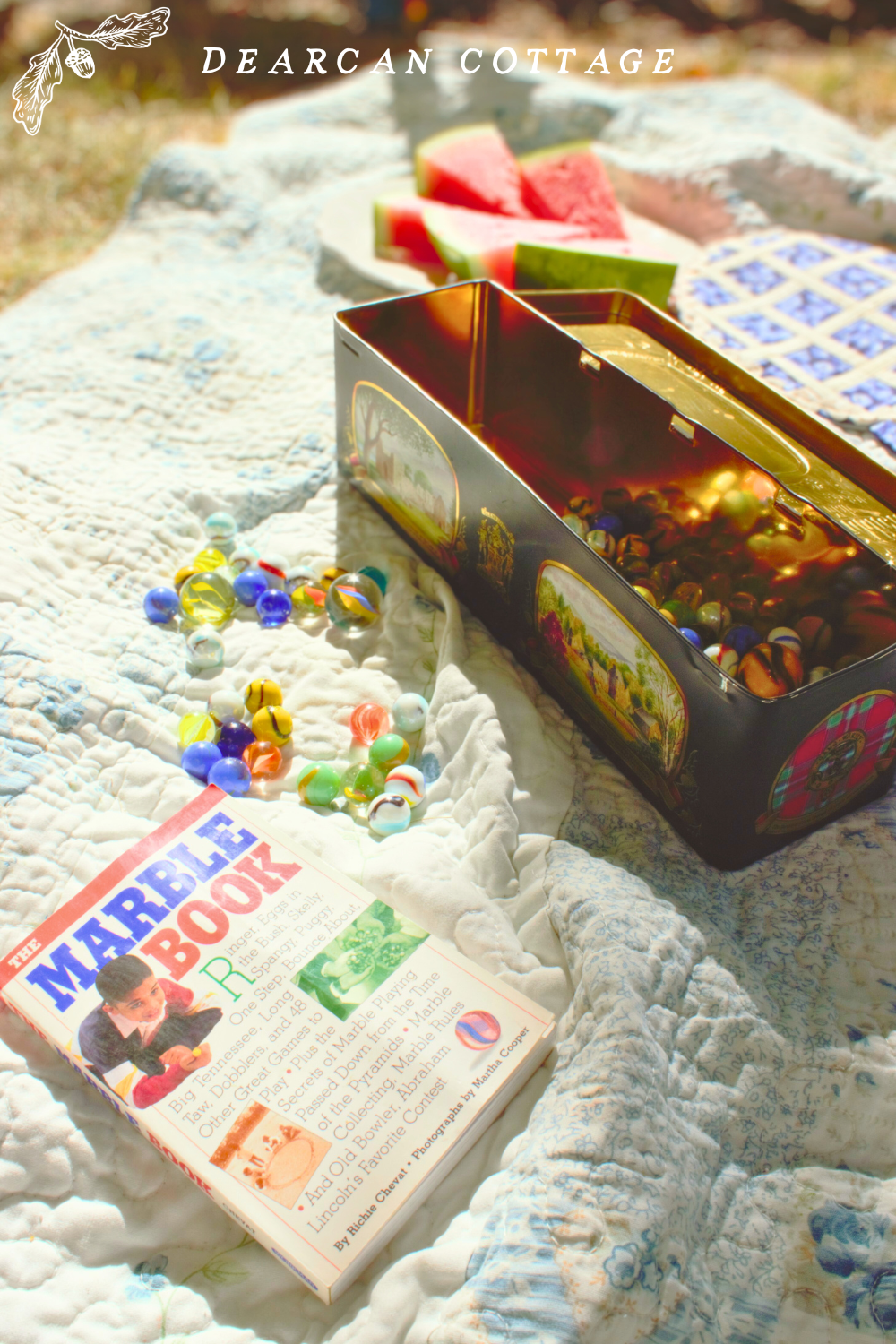
Rolling Through History
Marble games have a long history, dating back to ancient civilizations like the Egyptians, Greeks, and Romans. They are played worldwide, in many different ways, and have been referenced throughout literature and depicted in art for centuries. Any round object would do, whether made of stone, hardened clay, nuts, or olives.
In the 19th and 20th centuries, marble games peaked in popularity, captivating both children and adults with various games and strategies. From classic ring games to challenging target games, marbles transcended cultural barriers, bringing joy and competition worldwide. Tournaments were organized, schools integrated marbles into their activities, and manufacturers created marbles in diverse designs to meet the increasing demand.
Despite all the technical advancements we’ve made, marble games are still charming new generations, bridging the past with the present.

Art Credit: Depiction of two children playing marbles, by Frederick Juengling, “With Pride Upon Her Brow”, 1878
Marble Dictionary
Here are some brief explanations of marble language you may or may not heard of before.
- Bowl: Just like bowling is played with a bowling ball “thrown toward pins”, that’s what your marble is doing, “bowling” towards other marble targets. Some people historically have played with very large marbles, and would even “roll” their marble, instead of hitting (shooting) it with a thumb or finger. Click HERE to Marble Techniques, to learn how to “bowl” your marble like a pro.
- Ring: a circle gameplay area on the ground, most likely measuring about 3 feet in diameter, unless stated otherwise.
- Shooter Marble: this is any marble used to shoot into the ring area. Today, they are mostly understood to be your larger marbles. However, if you don’t possess a larger marble shoot with what you have. Larger marbles are also known as your “taws“, “boss“, “mibs“, or “alley“, and they are played not only to shoot but to shoot at as well depending on the game and culture.
- Ducks: Marbles you should at.
- Alleys, Aggies, Stonies: These are marbles made from stones or clay such as alabaster, agate, or water-turned stones found in a river or ocean. Many marbles were handmade before glassblown marbles were popularized.
- Mibster: a marble player and enthusiast.
Historically A Personal Game
My research on this subject has taught me that because marbles have been played for centuries, giving a perfectly true account of all the terms and gameplay has proven arguable. The game has been made personal to many players during their time and within their friend groups. If you have more knowledge of the sport, experiences, stories, or literature on the subject of marbles, feel free to share your wisdom in the comments for others to learn from!
Be sure to read to the end of the article where I share my favourite book resources on marbles, or jump ahead HERE.
Where To Buy Marbles
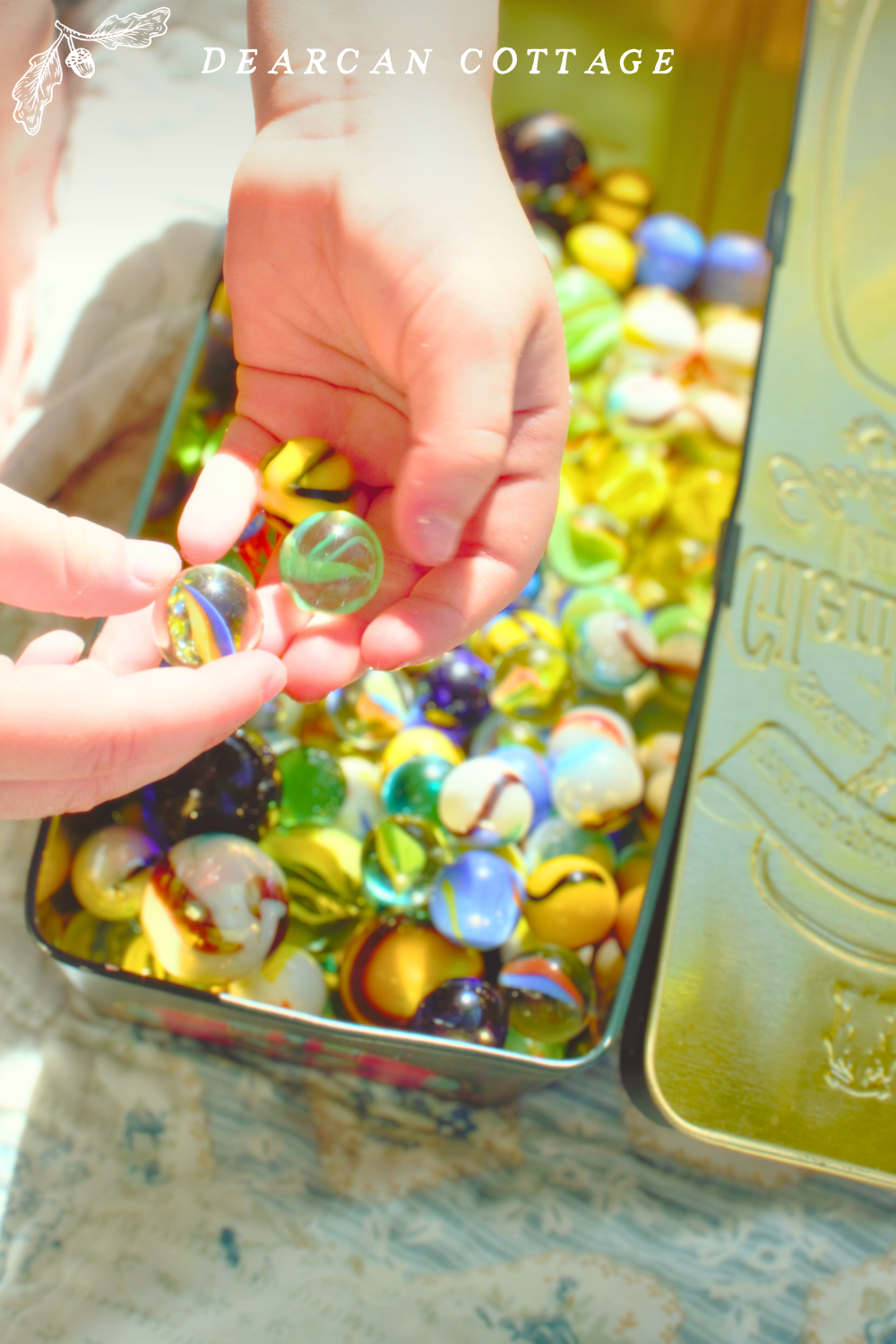
A good set of marbles makes a difference. This “Dragon Green” Marble Set is by Big Game Toys, and they have various Same-Colour Marble Sets that would be perfect for tournament-style games and collecting. Same with House Of Marbles Sets, there are lots of small marble sets to choose from in varying colours. The Neato Classics 160 Marbles Tin by Toysmith’ is the best bang for your buck, and one of the top gifted toys from Amazon! It’s not surprising marbles are so popular, as marbles are played worldwide with a host of serious competitions where players play for big prizes! Click HERE to jump to the part about marble tournaments in the States. Opening your stash of marbles always feels like a bundle of treasure with beautiful gems inside.

Essential Techniques for Marble Games
In the world of marble games, mastering essential techniques is the key to becoming a skilled player. From knuckling down to shooting techniques and defensive strategies, understanding and practising these fundamental skills will elevate your gameplay to the next level.

Knuckling Down
There are three main ways to shoot a marble. The first is the “knuckling down” method. Here, you place your knuckles on the ground and flick the marble with your thumb. This gives good control and power.
Pitching
The second way is the “pitching” method. Hold the marble between your index finger and thumb, then flick it forward. This is great for distance shots.
Flicking
The third way is the “flicking” method. Place the marble in your palm and use your thumb to flick it. This one’s good for accuracy. Each method has its strengths, so choose based on your needs.
Spin
Players learning to knuckle down can learn this special variance to spin their marble like a top. Mibsters (marble players) who can hit their shooter at just the right angle to make it spin can be a strategic play to use when needed. Not only can a spinning marble be aimed to shoot out a target, but it can spin and ricochet into more marbles in one shot! It’s a neat trick!
Defensive Strategies
Anticipating your opponents’ next moves is key to deploying effective defensive plays. Protect your marbles by creating barriers and maintaining a strong defensive position on the playing field. With practice, you’ll develop the skills to outmanoeuvre your opponents and secure your victory.
Engaging in marble games involves precise aiming and flicking of marbles, which can significantly enhance a child’s hand-eye coordination. Knowing when to use each technique during gameplay is essential. Practice consistently, stay focused, and enjoy the strategic thrill of this classic game!
Frequently Asked Questions
If you’re gearing up for an exciting game of marbles, you’ve probably got a few questions. How many players are needed? What’s the deal with playing for keeps? And how big should the game ring be? This post will give you all the answers. You’ll learn the key details to make your next marble game a great one.
How Many Players Can Join A Game Of Marbles?
Most marble games are kept between two to three players. This ensures the game is fast-paced and in the spirit of strategy. It’s not typically a group activity because marbles would be flying everywhere and would get lost amongst each other. Groups would certainly watch players and wait their turn at a chance to play, or break off to start their own game. Keeping games amongst small groups helps players to focus and play with precision.
A Note About “Playing For Keeps”
Depending on the setting, players may choose to play for keeps, trade amongst each other, or return all marbles at the end. Playing for keeps means what you win, you keep. If payers are really depressed about losing their favourite marbles, they may choose to trade other marbles to “buy back” their favourite marbles at the end of gameplay, or play again to “win back” their marbles. Either way, playing for keeps should be discussed before the game. Returning all marbles ensures nobody leaves empty-handed, perfect for casual games, sharing with people who don’t own marbles, or when playing with younger kids. So, whether you’re competitive or just in it for fun, there’s a way to play that suits everyone.
Making Your Marble Game Ring Area
There are a few ways to make your game area with a ring. Depending on where you play, you can either draw a circle in the dirt, draw chalk on the pavement, use a hula hoop on the floor, or a string on the carpet. Some people love the sport so much that they buy or build their own Ringer arena. Your game area should stretch across at least three feet unless otherwise stated.

How To Play Marble Games
Marbles have been a beloved pastime for generations, offering endless hours of fun and friendly competition. Let’s roll into the top traditional marble games that have stood the test of time. Once your kids know the many ways to play marbles, they might just want to join a marble club or make new marble games of their own!
Ringer
To set up the game, players create a circle in the dirt or sand, around 10 feet in diameter, known as the “ring.” Thirteen marbles are contributed by players and placed inside the centre of the ring, in a cross shape, three inches apart. To play, players use their shooter marble, to knock the target marbles out of the circle while keeping their shooter inside. Players take turns, and the one to hit 7 marbles first wins. It’s a game of skill and precision, requiring a steady hand and a good eye.
Bridgeboard
To play Bridgeboard, it requires a board with five to nine arch holes for the marbles to roll under. You can make yours out of wood or cardboard, or check out this House Of Marbles Bridgeboard Set. Above each arched hole is marked with either random values (8, 3, 5, 7, 2, 4, 9, 1, 6; this example is also known as “Nine Holes”), or follow a symmetric sequence with a central point (3, 2, 1, 0, 1, 2, 3). One non-player is the bridge keeper. Players take turns shooting their marbles towards the bridgeboard arches. If players miss, the bridge keeper claims their marble. When a marble is shot successfully through an archway, the bridge keeper rewards the player with the number of marbles to the number marked on the archway crossed. The player with the highest score after a set number of rounds wins.

Boss Out, and Long Taw
“Boss Out” (also known as Boss and Span) is a thrilling marble game that tests players’ dexterity and decision-making skills. To start the first play “Bosses” (shoots hard and far with a shooter sized marble) their marble as far as they can. This sets the mark for the next player to knock out or span the distance with an indirect hit from another marble. Players take turns shooting marbles to hit or touch their opponent’s marble. You can do this either by way of spanning the distance between marbles or hitting their opponent’s marble directly. “Long-Taw” is similar, where players aim at each other’s marble to try and shoot out. Except it’s played only with shooters, and typically a game for keeps!
Ring-Taw
To play this simple yet timeless game of Ring-Taw, players draw two circles with chalk on the ground. The outer circle measures six feet in diameter, and at its centre draw another ring measuring 9 inches across. Each player places one or two marbles inside the inner ring and takes turns aiming at the marbles from outside the outer circle. The player who shoots out the most marbles from the inner ring wins. As long as their shooter doesn’t exit the outer ring they get another turn. Players don’t retrieve their marble to start where they began outside the circle but play where it stopped the last throw.
Bun-Hole, Holy, and Cob
“Bun-Hole” is a game that requires players to make a small circle at a comfortable shooting distance. Kids can either dig a small, shallow, bowl-shaped hole with their heel in the dirt, or draw a small circle with chalk. Like the game of curling, you are aiming to get as close to the centre as possible. To win the round, players don’t need to land within the circle to win but get as close to it as they can. Historically, kids would add to this game by making more than one hole to shoot at, also known as the game “Holy”. The marble game “Cob” is similar, with four holes in the ground, but with the stipulation, that your shooter marble must land in the holes. The player with the most marbles “bossed” into the holes wins.
Holy-Bang
Players are to dig one bowl-shaped, shallow hole in the ground, and place a single marble at its centre. Players bowl towards the marble with their shooters. If they can hit the marble in the hole out three times and skillfully land their marble there the fourth, they win the game. All missed marbles are claimed by the winner if playing for keeps!
Doublers
Players each contribute a predetermined set of marbles to form a line. Marbles need to be spaced two marbles apart. To play, each player chooses a shooter marble to shoot at the line of marbles. Once a player shoots a marble out of the line that player keeps that marble. When the player shoots with their shooter ball, they would leave it where it stops and return to shoot it again at their next turn, much like the rules of golf. If player B shoots out player A’s shooter ball, player A must contribute another ball to the line but still keep their shooter ball. The goal of the game is to shoot as many marbles out of the line as they can until the line is gone.
Conqueror
To play this game one player starts by shooting forward, and the second player aims to shoot out the first’s marble. If the second player shoots out the first player’s marble, he wins that marble and therefore resets the game by shooting out another marble forward. If he misses, his marble remains in the play area. When there is a third player, he plays to hit one or as many out in one shot as he can. This is where learning to spin your marble can pay off. If the player manages to shoot out all marbles, they are considered captured. The game ends after a decided number of marbles are captured.
Hundreds
This game is played by two players who shoot towards a smaller circle ahead. If both players manage to get inside and stay within the circle, the players go again without points. If one players marble stays with in the circle, that player gets 10 points, and goes again until he misses the circle. The goal is to get to 100 points. If a player misses, the next player takes their turn, until they miss. The first to get to 100 wins, and gets a set of marbles players agree to give over as a prize.
Whether you’re a novice or a seasoned player, these marble games offer endless fun and excitement. Marble games like Ringer, Bridgeboard, Ring-Taw, Hundreds, Doublers, Conqueror, Bun-Hole, Cob, Holy, Long-Taw and Boss Out provide a nostalgic glimpse into the simple joys of childhood play. These timeless games continue to captivate players of all ages, fostering skill development, social interaction, and fond memories that last a lifetime.
Compete In A Tournament
Since 1922, the National Marbles Tournament has been held every summer in Wildwood, New Jersey. It’s the longest-running tournament for kids in the country! Kids train in clubs, garages, and schools all winter long to compete. They aim to win scholarships, trophies, and the chance to win the title of best marble player at this competition. Watch this All The Marbles Documentary to get your kids excited about trying out this strategic sport!
Let’s hold on to these nostalgic traditions and share the joy of playing marbles with those around us. Let’s keep the spirit of friendly competition alive and pass down the simple pleasures of marble games to future generations, ensuring that these classic pastimes remain a beloved part of our cultural heritage.
Time Rolls Like A Marble
The timeless allure of marble games bridges generations, offering more than just entertainment. These games hone hand-eye coordination, strategy, and social interaction skills, wrapped up in the simple joy of play. Whether it’s the classic “Ringer” or the adventurous “Bridgeboard,” each game carries with it a piece of history and a splash of nostalgia.


More Marble History
Rediscovering these traditional games can be a delightful journey back to the simplicity of childhood yesteryears. Check out these free online books in the public domain records to read more about the historic playlore of marbles!
- Kate Greenaway’s Book of Games (pg. 50)
- Healthful Sports for Boys by A. R. Calhoun (Chapter 1)
- The Traditional Games Of England, Scotland, and Ireland V1- Alice Bertha Gomme (pg.364)
- The Traditional Games Of England, Scotland, and Ireland V2- Alice Bertha Gomme
- The Sports and Pastimes of the People of England – Joseph Strutt (pg. 384)
Have more marble literature to add to this list? Share in the comments for other Mibsters to enjoy!