
How to Make Authentic Borscht That Captures Grandma’s Timeless Flavor
There’s something magical about the taste of borscht that takes you straight back to Grandma’s kitchen. This hearty soup isn’t just a dish—it’s a tradition, a piece of family history served in a bowl. Loved across Eastern Europe, borscht brings together simple ingredients with bold flavours that feel like home. But the key to capturing that rich, authentic taste lies in the details: the right beets, the perfect balance of tang, and, of course, patience. In this guide, I’ll show you how to recreate the flavours you remember, with tips to honour Grandma’s timeless recipe while making it your own.

This page contains affiliate links, which means I may earn a small commission at no extra cost to you. As an Amazon Associate, I earn from qualifying purchases.
Everything You’ll Want To Know About Borscht
- Borscht Recipe Card
- The Origins and History of Borscht
- Ukrainian Borscht
- Polish Borscht
- Russian Borscht
- Mennonite Borscht
- Health Benefits of Borscht
- Step-by-Step Guide To How To Make Borscht Recipe
- Ingredients
- Equipment ( and how to make it faster)
- Secret to Savoury Borscht
- Recipe Steps
- Vegetarian Versions
- How to Achieve Grandma’s Authentic Flavour
- Answers To Common Questions
- Troubleshooting your Borscht


Delicious Savoury Borscht Recipe
Ingredients
Equipment
Notes
- Box Grater
- All-In-One Mandolin & Vegetable Chopper
- Food Processor
Read blog below to learn how to make this recipe vegan and yummy!
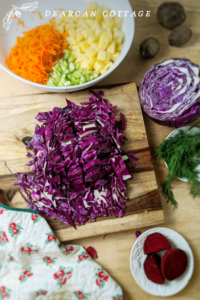 Step By Step Guide To Make Borscht
First Step: Prep Vegetables
Step By Step Guide To Make Borscht
First Step: Prep Vegetables
- Gather ingredients on the table
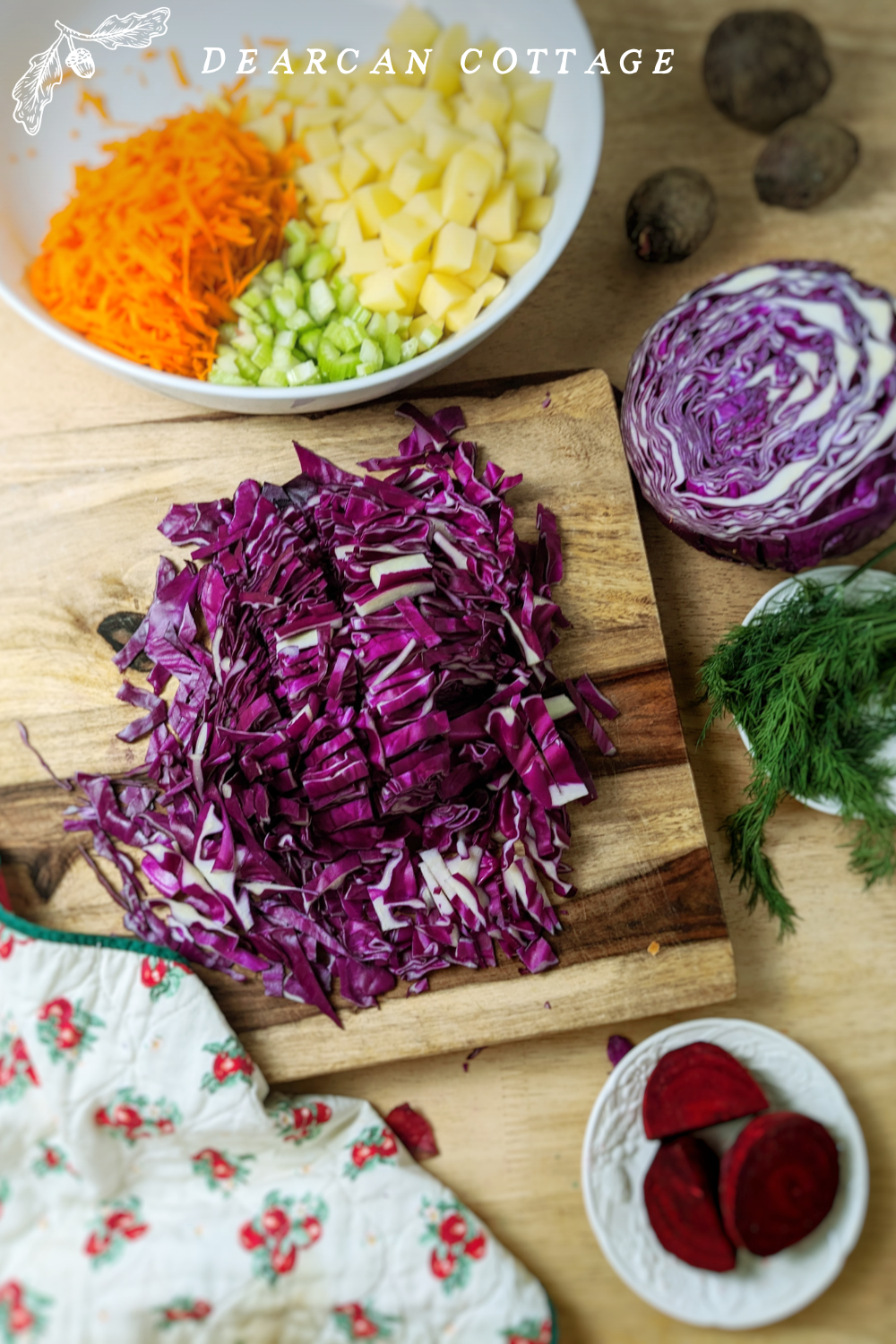
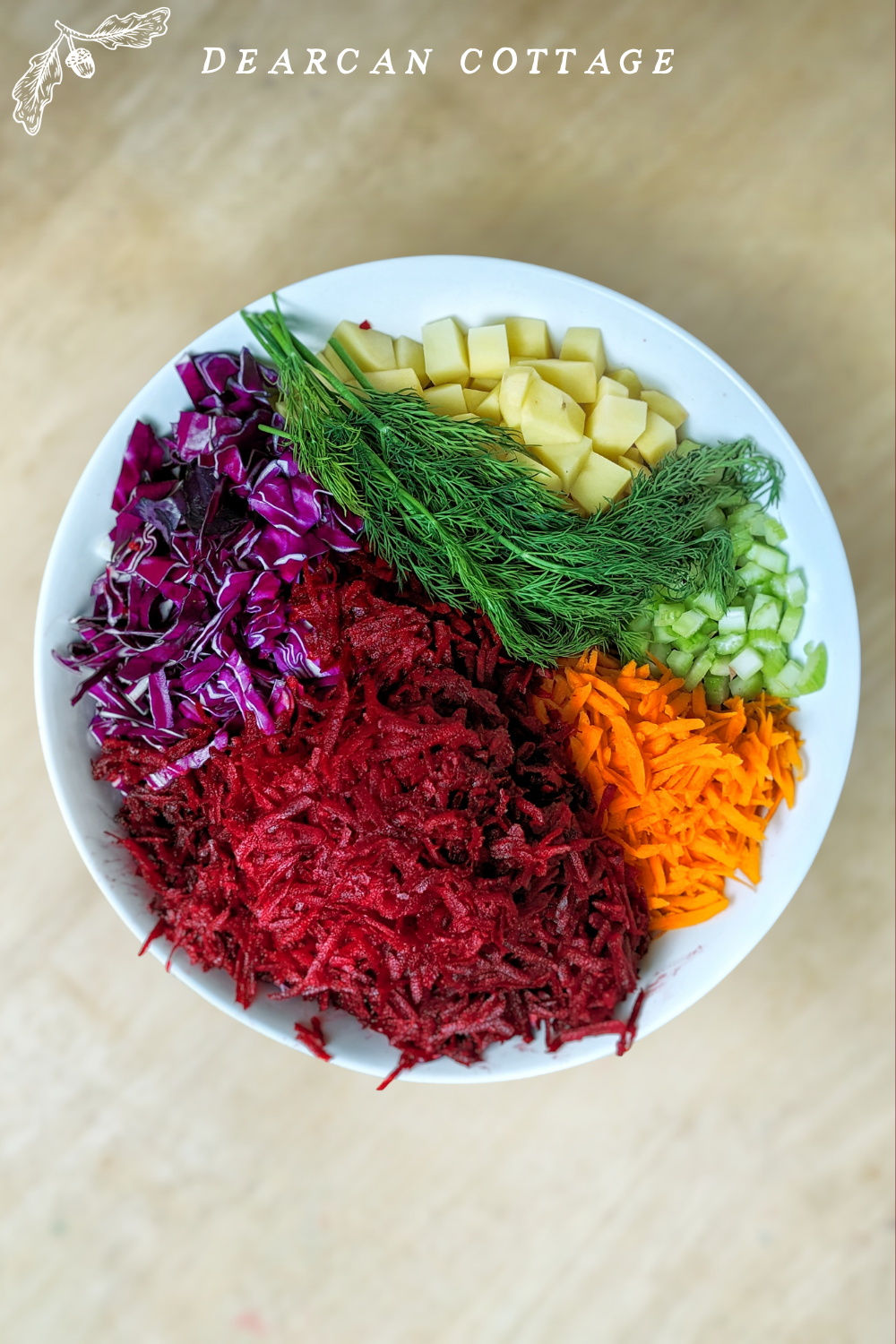
- Chop: Beets, Carrots, and Cabbage in matchstick shape (use knife or grater to make this)
- Chop: Potatoes, Tomatoes, and Celery in cube shape (square choppers or knife)
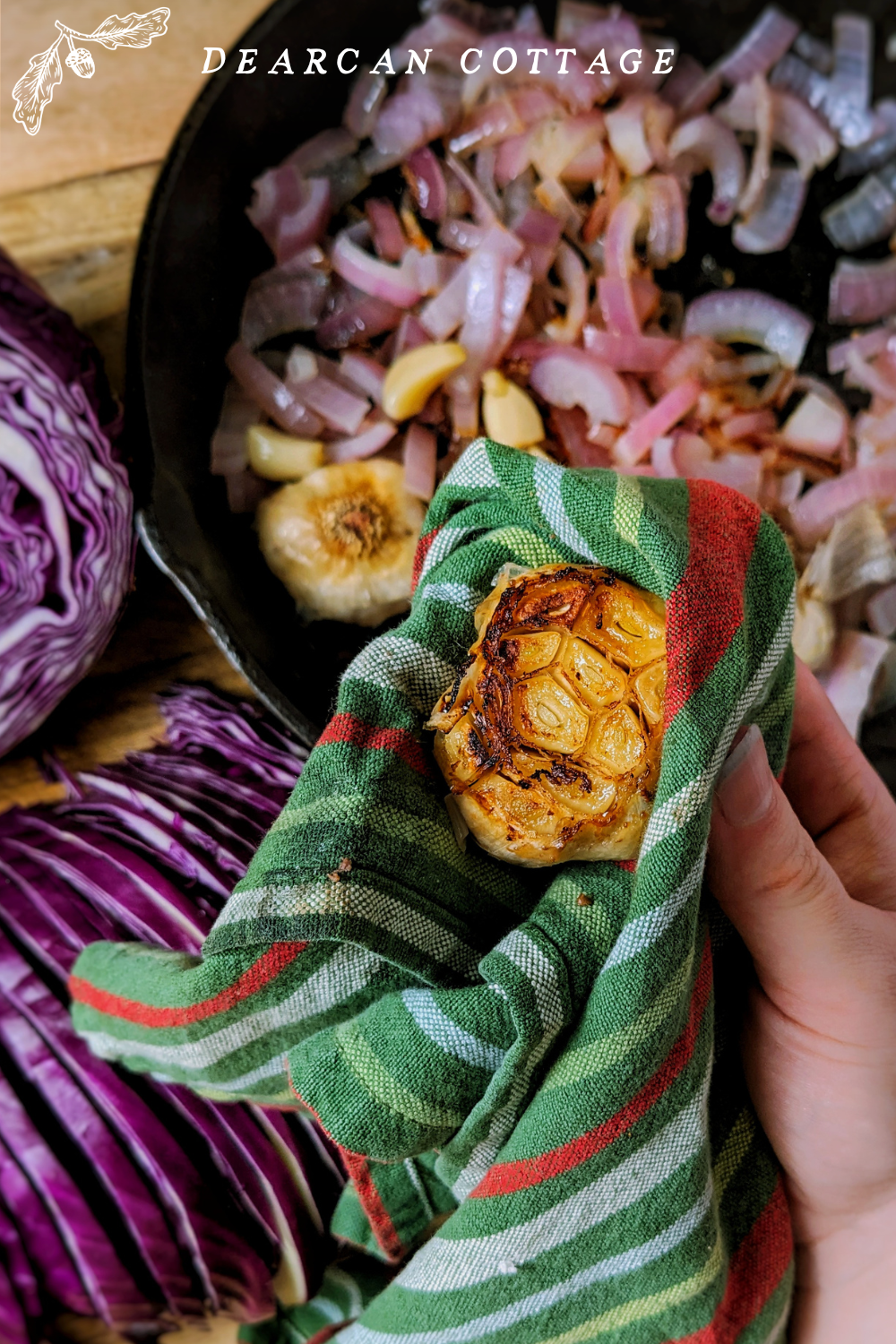
- Place beef on a skillet with butter or oil.
- You can roast your garlic and a healthy pinch of salt.
- Cook until tender and no longer pink.
- Add shredded and cubed vegetables to the broth
- Add seasonings and salt
- Let cook for at least an hour on medium-high (or more if in crock pot set to when you want it by)
- Borscht tastes even better when served warm with toppings.
- Ladle the soup into bowls.
- Add a dollop of sour cream and a sprinkle of fresh dill.
- Serve with rye bread or garlic rolls for a complete meal.
The Origins and History of Borscht
The word borscht, or borsch (depending on where you’re from), has its roots in the Slavic languages. Before beets became the star ingredient, people made borscht from fermented hogweed leaves, perfect for harsh winters. Eventually people found beets were more hearty, nutritious, available year-round, and gave it that rich red color. The shift from hogweed to beets also marked a transition from survival food to something more refined and celebratory.
It’s a symbol of resourcefulness and togetherness. Families in tough conditions would make borscht from whatever they had on hand—a little meat, some vegetables, a dollop of sour cream—and share it as a hearty meal. That adaptability is part of what makes borscht so special.
Borscht Versions Across Cultures
Across Eastern Europe, you’ll find different versions of borscht, each with its own twist. These variations tell the stories of the regions they come from and the people who made them.
Ukrainian Borscht
Widely regarded as the birthplace of borscht, Ukraine’s version is what most people picture when they hear the word. Traditional Ukrainian borscht is a vibrant red soup made from beets, cabbage, potatoes, carrots, and onions. It often includes pork or beef for added richness, and a dollop of sour cream is a must. It’s made vegetarian traditionally on Ukrainian Christmas, to represent the animals present at Christ’s birth. Some families add kidney beans or a splash of vinegar for extra depth.
Polish Borscht
Polish borscht, or barszcz, stands apart with its lighter, more delicate flavor. While it still features beets, it’s often strained to create a clear broth. This style of borscht is commonly served during Christmas Eve dinner, alongside tiny mushroom-filled dumplings called uszka. Polish white borscht discludes beets and is served with Polish kielbasa, potatoes, and sour cream-water broth.
Russian Borscht
In Russia, borscht tends to be heartier and features more meat. It’s not uncommon to find versions with added tomatoes, giving it a slightly tangier taste. Russians often enjoy borscht piping hot with a slice of rye bread on the side. While similar to Ukrainian borscht, the Russian version leans into its robust, stick-to-your-ribs qualities, perfect for cold winters.
Mennonite Borscht
Mennonite borscht offers yet another spin. Unlike its beet-based relatives, this version is usually orange. It’s made with cabbage, potatoes, dill, and a cream base rather than the iconic beets. Mennonite borscht is an example of how the recipe adapted when Mennonites settled in different regions, using local ingredients to carry on their traditions.
Health Benefits of Borscht
Each ingredient in borscht makes this hearty dish so good for your health! It’s perfect for those cold dreary winter months to keep your body “bright-eyed-and bushy-tailed” as my grandma liked to say.
- Supports heart health
- Improve blood flow
- Lower blood pressure
- Reduce cholesterol
- Boosts Immunity
- Loaded with vitamins like C, A, and E
- Improves Digestion
- Adds dietary fibre
- Promotes healthy gut bacteria
- Aids nutrient absorption
- Rich in Antioxidants
- Supports liver detox
- Low in calories
- High in nutrients
- Promotes Healthy Skin
- Anti-inflammatory
- Supports Bone Health
- Boosts brain function
- Balances Blood Sugar Levels
- Low glycemic index
- Contains iron, magnesium, folate, and potassium
- And the list goes on!
Delicious Savoury Borscht Recipe
Borscht is a classic Eastern European soup that’s hearty, flavorful, and perfect for any season. With its vibrant colour and rich taste, beef beet borscht is the ultimate comfort food. Let’s break it down into simple steps so you can make a pot of this delicious soup.
Borscht Ingredients
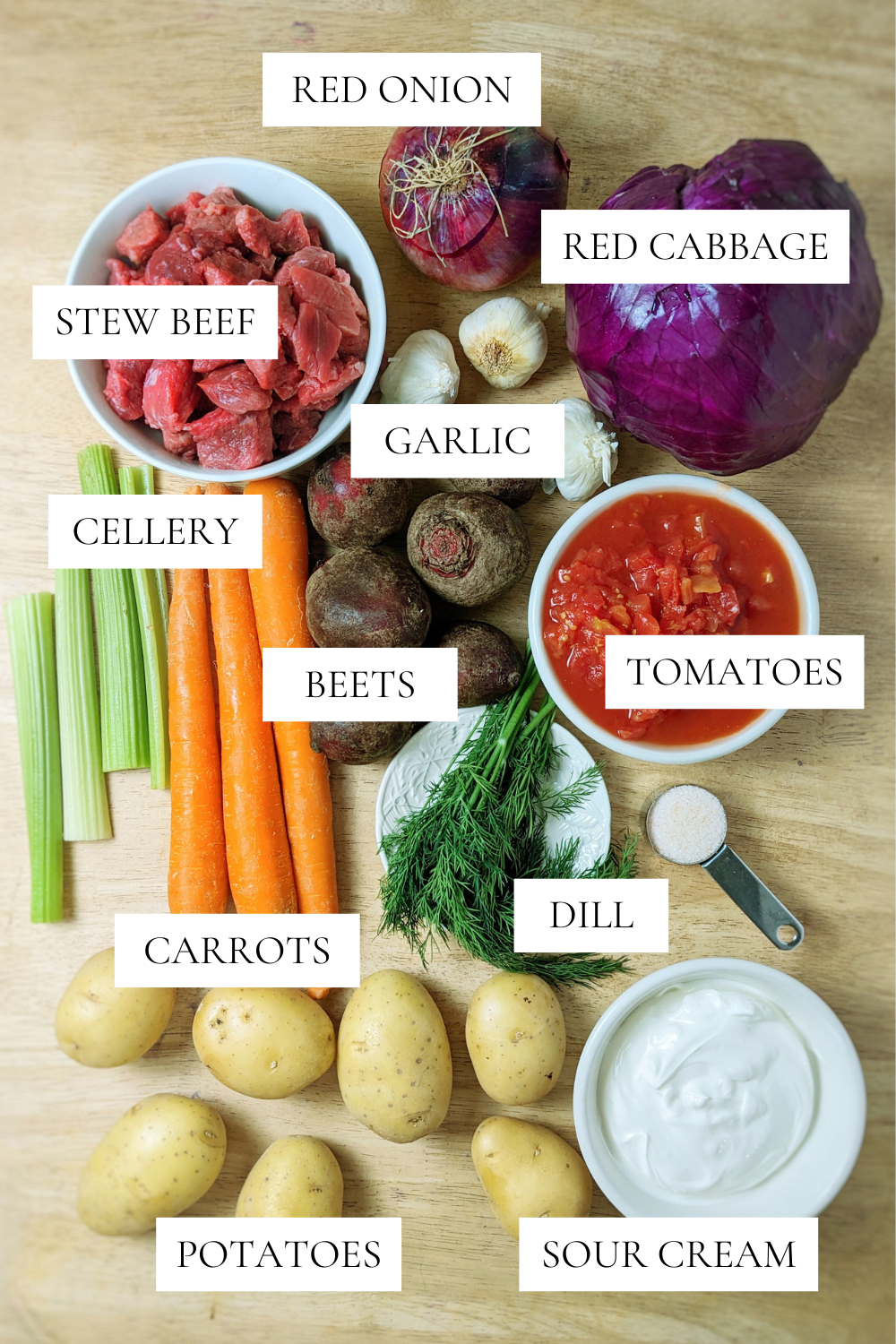
To make the best beef beet borscht, you’ll need these essentials:
- 1/4 cup – 1 1/2 cups Beef: Use beef stew meat or steak (See vegetarian borscht notes here)
- 3 Medium Beets
- 1/2 Head of Purple Cabbage
- 2-3 Carrots
- 1 Red Onion (yellow onion, leek, or shallots)
- 4-6 Potatoes (I like to add as many as I’m serving to feed, or double to ensure leftovers)
- 3 Medium Tomatoes (tomato paste, or can of diced tomatoes)
- 2-4 Cups Broth/Base: Use beef or vegetable broth, as much as you need to fill your pot and cover vegetables. You can substitute with water, but it will reduce the flavour.
- 4+ TBSP of Oil or Butter
- Seasonings: Fresh or Dehydrated Dill, Bay Leaf, Garlic, Salt, and Pepper
- Sour Cream: For serving and extra creaminess.
This page contains affiliate links, which means I may earn a small commission at no extra cost to you. As an Amazon Associate, I earn from qualifying purchases.
Equipment You’ll Need (and might want)
- Stock Pot (or crock pot) 8-10 Quart (or whatever you have)
- Spoon Ladle
- Knife & Cutting Board
- Peeler
- Grater or Food Processor (optional)
Optional Equipment To Cut Prep Time
The prep work of borscht is usually what makes people think twice about making it. With all the health benefits, and the fact some make this dish for Christmas tells you it’s more than special. Here’s equipment ideas to cut your veggies fast and make your borscht in half the time.
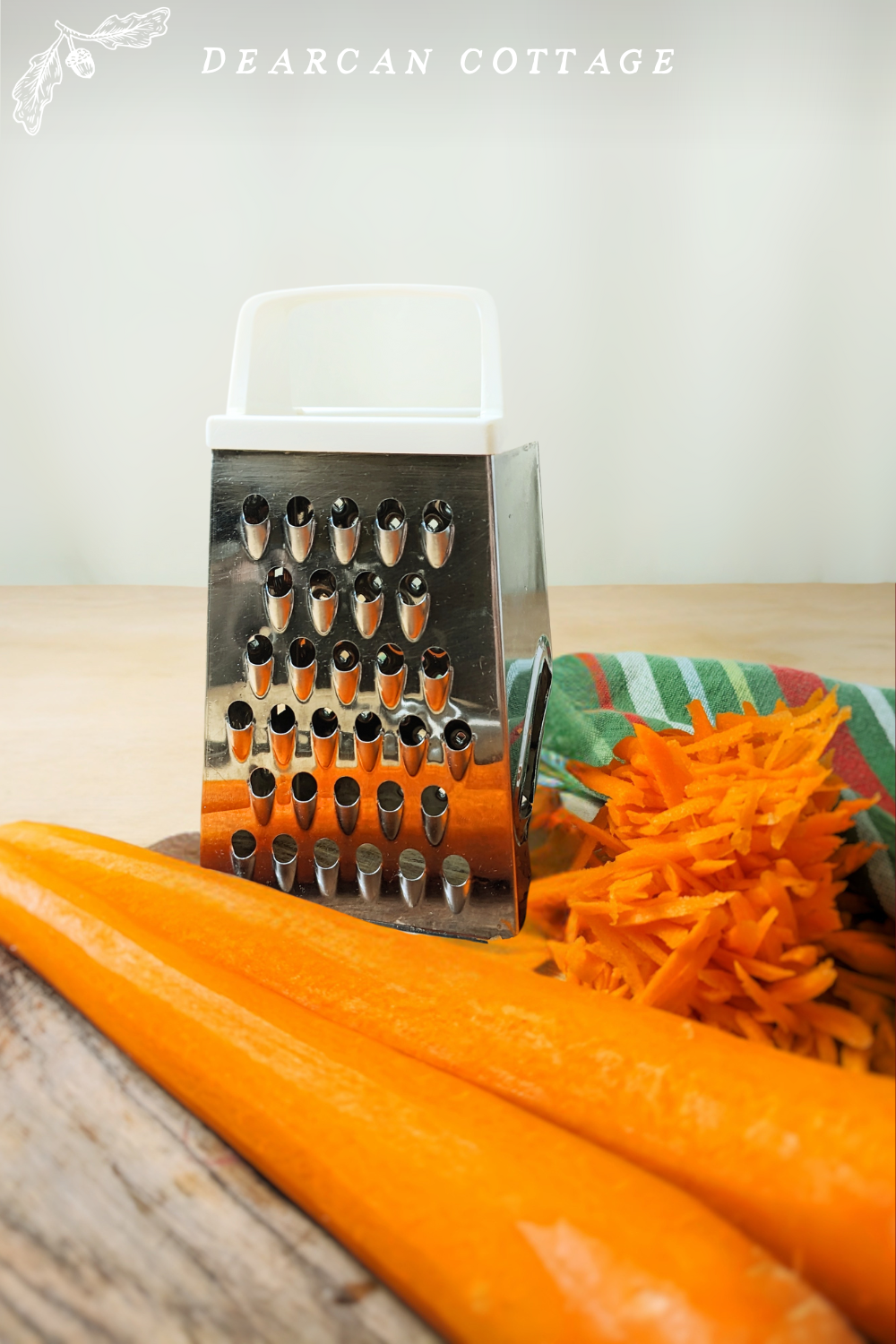
- Box Grater (most affordable, easiest to clean, makes matchsticks chops)
- All-In-One Mandolin & Vegetable Chopper (affordable, with grater & cube chopper)
- Food Processor (fastest prep time for matchsticks, cleaner chopping with beets, investment)
How To Peel and Chop Beets
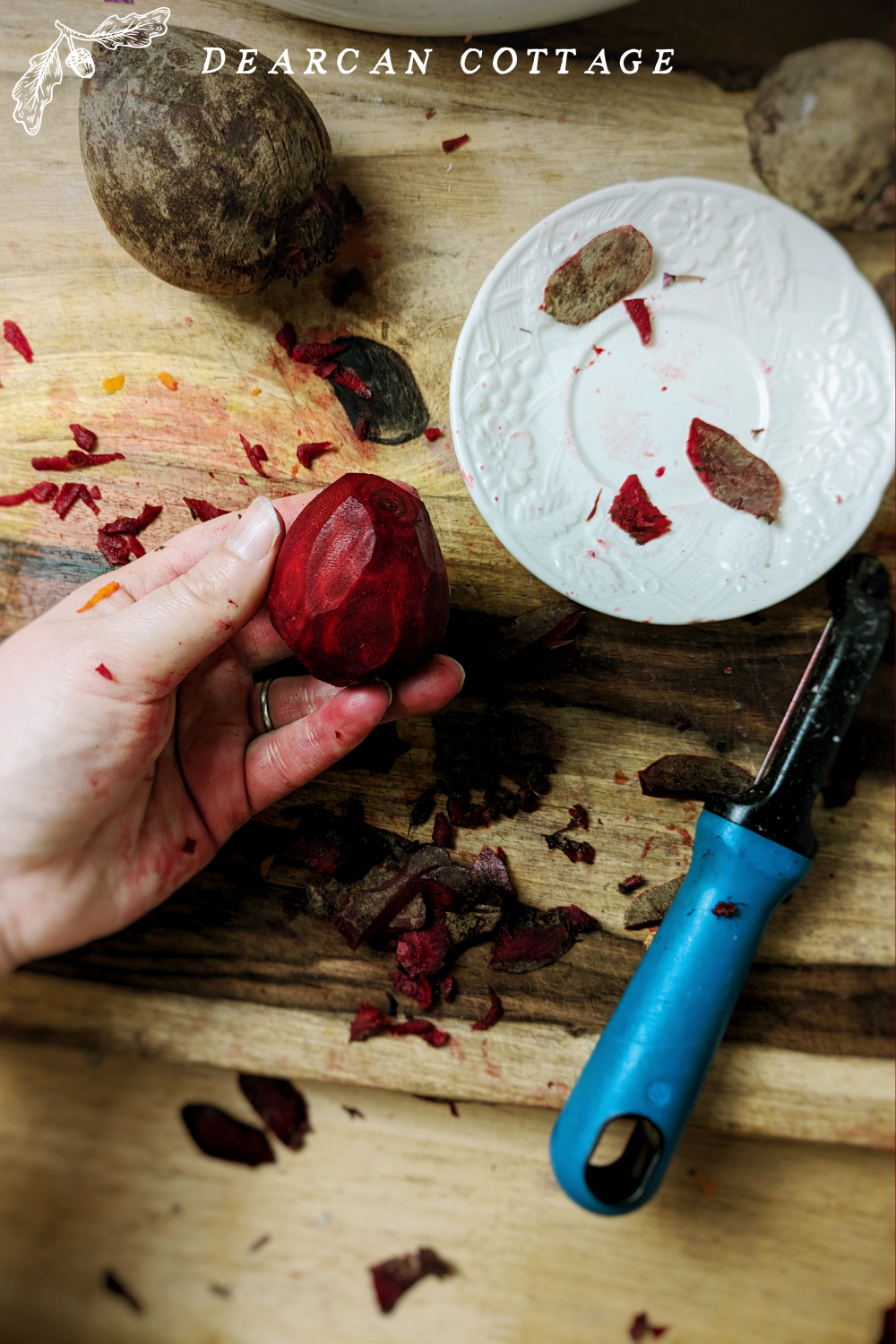
Start by scrubbing the beets under running water to remove dirt. Slice off the tops and roots. Use a vegetable peeler to remove the skin. Cut the beet into thin, round slices. Stack a few slices at a time, then cut them into thin strips. Work carefully, and watch what you wear, because beets stain, but what a beautiful colour.
Secret To Savoury Delicious Borscht: Beef Consommé
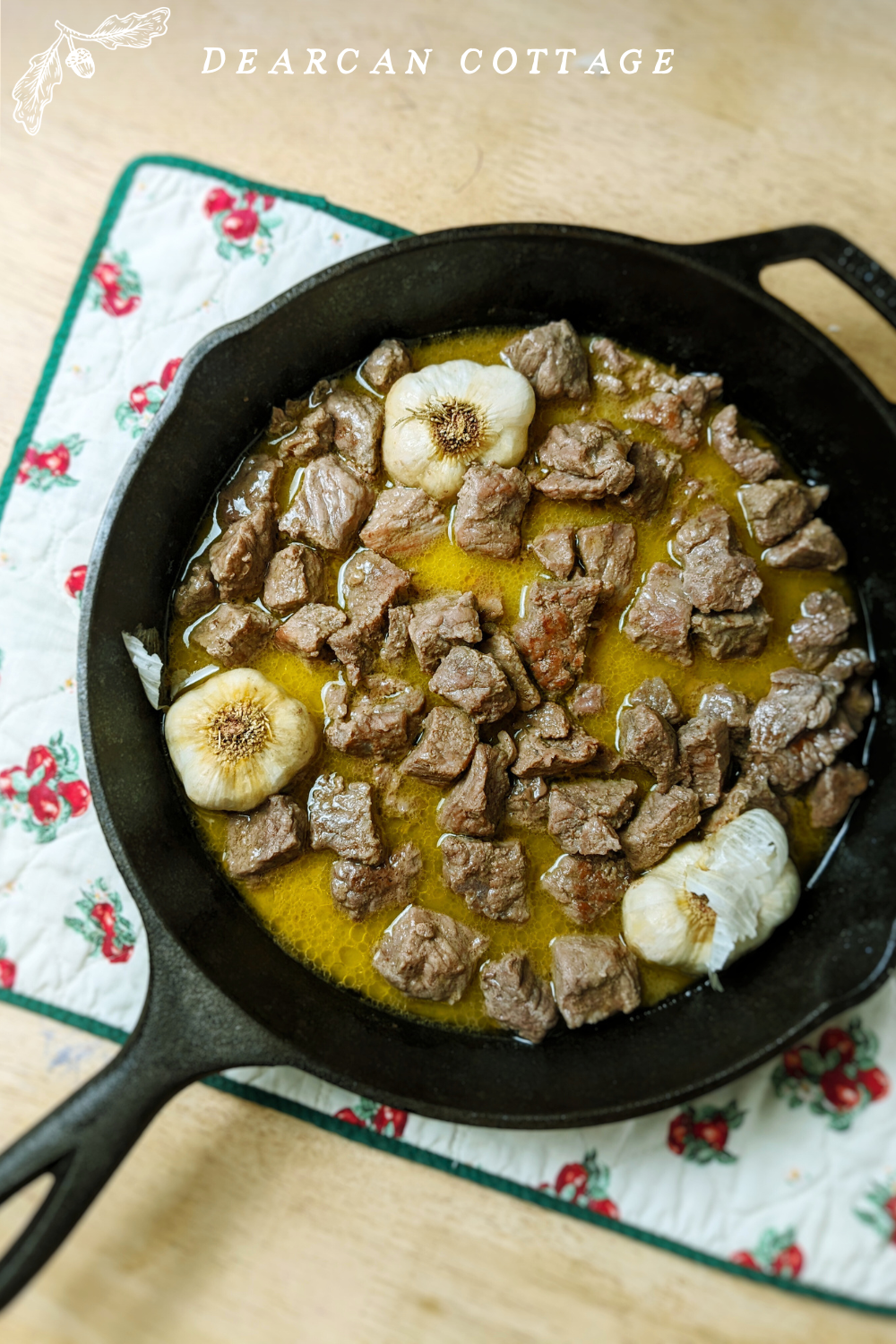
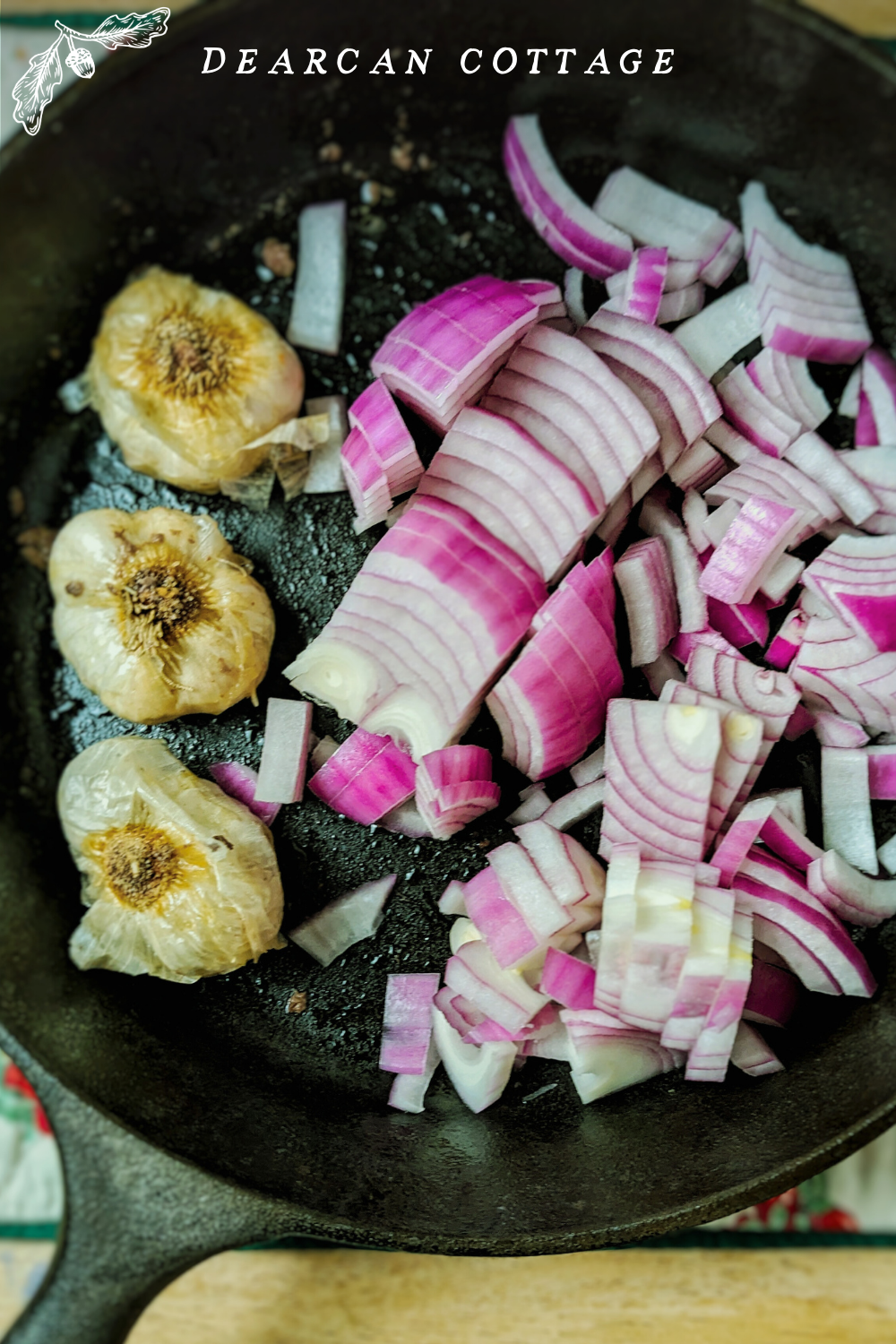
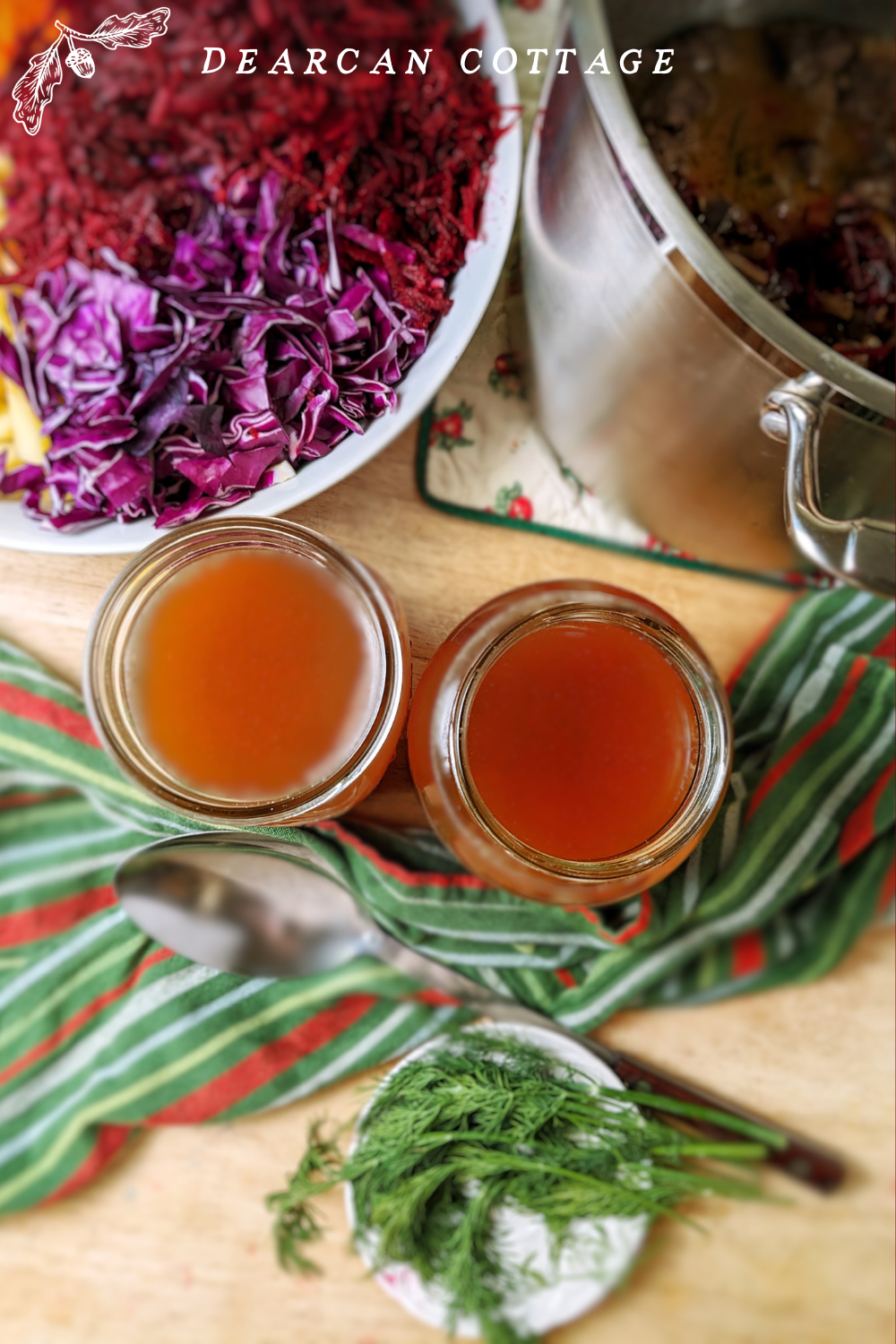
Start by simmering the beef on a skillet with oil (or butter, my preference). I like stew chunks or steak. You don’t even need very much, but do add a nice amount of oil and a healthy amount of salt to the pan. I like to saute my garlic and onions to the pan in the leftover oils. This adds a savoury base to your soup broth, which you’ll pour into your borscht for a dreamy savoury flavour.
Want this to be vegetarian? Click here to learn how to make this recipe vegan.
Step By Step Guide To Make Borscht
First Step: Prep Vegetables
- Gather ingredients on the table
- Chop: Beets, Carrots, and Cabbage in matchstick shape (use knife or grater to make this)
- Chop: Potatoes, Tomatoes, and Celery in cube shape (square choppers or knife)
Second Step: Saute Beef, Garlic, & Onions
- Place beef on a skillet with butter or oil.
- You can roast your garlic and a healthy pinch of salt.
- Cook until tender and no longer pink.
Third Step: Add Everything to the Broth
- Add shredded and cubed vegetables to the broth
- Add seasonings and salt
- Let cook for at least an hour on medium-high (or more if in crock pot set to when you want it by)
Serve and Enjoy
- Ladle the soup into bowls.
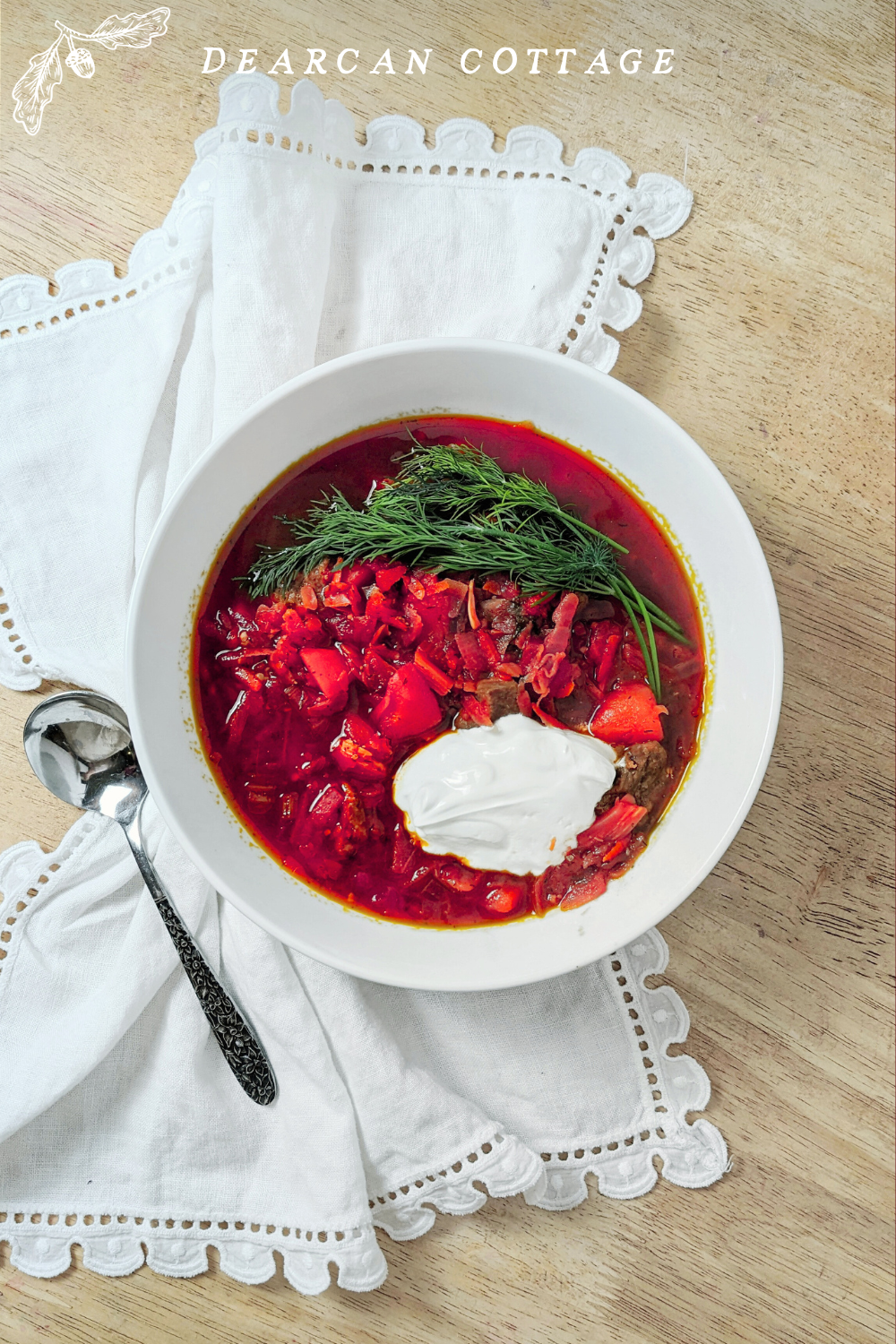
- Add a dollop of sour cream and a sprinkle of fresh dill.
- Serve with rye bread or garlic rolls for a complete meal.
Jump Ahead To
- Answers to common questions HERE
- How long does borscht last in the fridge?
- Can you freeze borscht? (and how to reheat)
- Can you eat it cold?
- What goes well with borscht?
- Troubleshooting your recipe HERE
- How to fix borscht that’s too sour?
- How to fix borscht that’s too sweet?

Vegetarian Borscht
There are a few ways to make a vegan version of my borscht recipe that’s delicious and good to share. The obvious change would be to use a vegetable broth, versus a meat-based one. I strongly suggest not using water alone. As beautiful as beets are, with their rich colour, some would prefer to hide their strong vegetable taste. You can build your vegetable borscht flavour in a few variant ways.
Pick one or a few of the following, to add more flavour, that sound good to you:
- White wine, white mushrooms, prunes, juniper berries, rosemary and allspice
- Apple cider vinegar (lemon juice or flavoured vinaigrette), and maple syrup (or cane sugar)
- Fermented vegetables (beets, carrots, or sauerkraut)
- Choose your flavour-onion: Leek, yellow onion, red onion, or shallots
- Add protein with kidney, pinto or mixed beans
- Try smoked spices, or roasting your vegetables to add depth of flavour
What would you add? Tell me what your favourite combination is in the comments below!
Tips for Achieving Grandma’s Authentic Flavor
Grandma’s borscht had a unique magic, didn’t it? Here’s how to channel that same magic in your kitchen.
- Make Your Own Broth From Scratch
- Ferment the Beets or add Sauerkraut
- Balance the Sweet and Tangy (minimally with sugar, potatoes, or cream to balance sour flavours)
- Use Fresh Dill Generously
- Cook in Layers (sauteed, roasted, seasoned, and oiled veggies in steps)
- Reheat Before Serving
Borscht almost always tastes better the next day. Reheat it gently to allow the flavors to shine. - Serve with homemade good pairings (click to see list below)
Remember, borscht is all about making it your own while honouring the tradition. Embrace the process, and you’ll have a pot of soup as warm and comforting as a hug from Grandma.
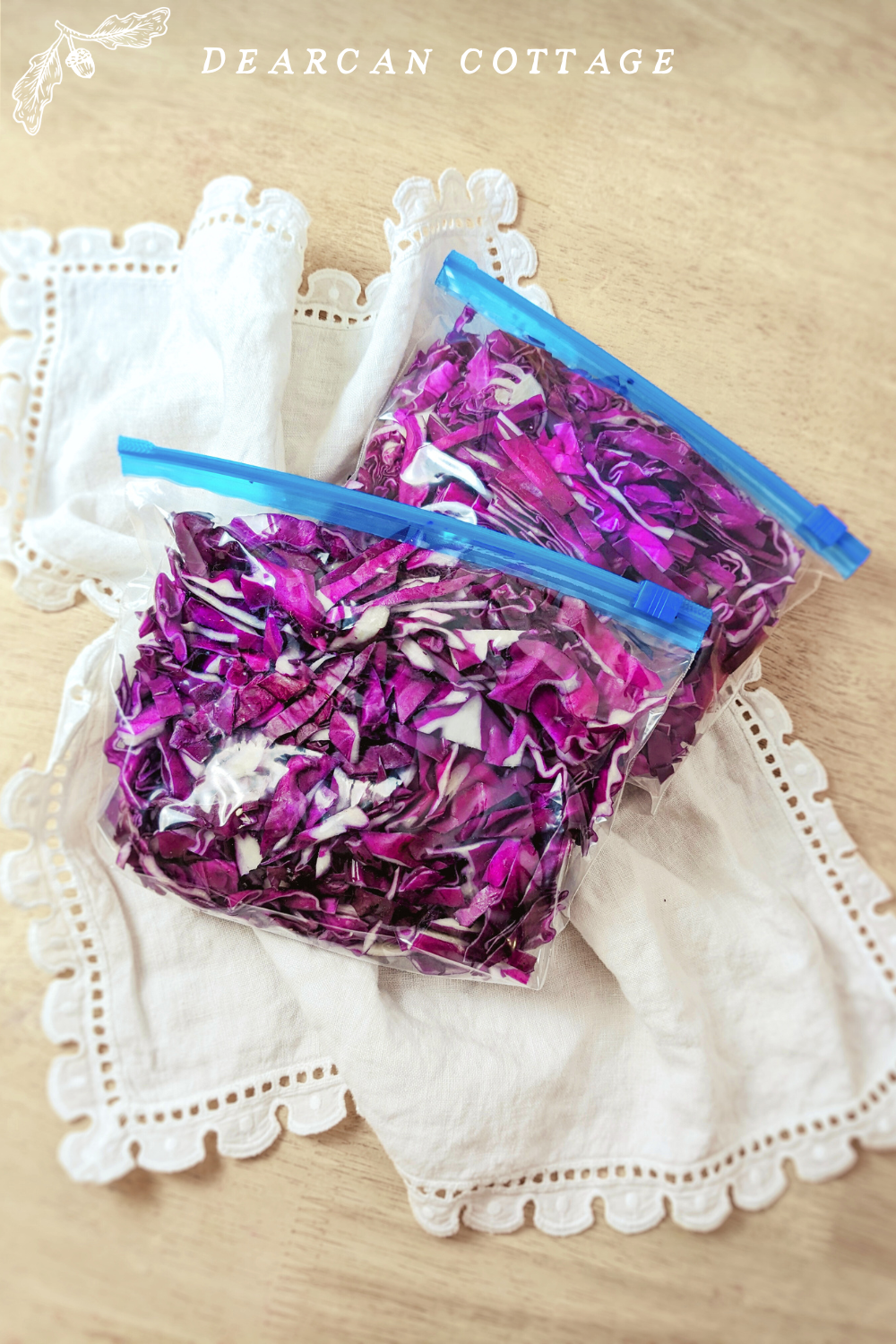
Save the rest of your head of cabbage and freeze it for next time you make borscht to cut down the prep time.
Answers to Common Borscht Questions
Borscht is a beloved dish with plenty of variations, and it’s no surprise that home cooks often have a lot of questions about it. Let’s answer some of the most common questions about this timeless soup.
How Long Does Borscht Last in the Fridge?
Borscht typically lasts 3 to 5 days in the fridge if stored properly, and might taste better the next day!
Can You Freeze Borscht?
Yes, borscht freezes wonderfully because of all the hearty root vegtables!
- Let the soup cool completely before transferring it to freezer-safe containers or heavy-duty freezer bags.
- Portion it into individual or group sized servings so you can reheat only what you need.
- Leave some space at the top of the container, as the liquid will expand as it freezes.
To reheat:
- Thaw in the fridge overnight for the best texture and flavor.
- Warm it up over low heat on the stove (or crock pot), stirring occasionally. Avoid over boiling, as this can break down the vegetables too much.
Borscht can last in the freezer for up to 3 months, making it a perfect make-ahead option for busy weeks.
Can Borscht Be Eaten Cold?
Absolutely! Cold vegan borscht, also known as chilled borscht, is a summer favorite. Its refreshing quality and vibrant taste make it perfect for warm days. Chilled borscht is often served with:
- Hard-boiled eggs, either sliced or grated into the soup for added protein.
- A generous dollop of sour cream for creaminess.
- Fresh herbs like dill to brighten the flavor.
For best results, chill the soup for a few hours after cooking to allow the flavors to meld even further. It’s light, tangy, and a unique way to enjoy borscht when the sun is out.
What Goes Well with Borscht Soup?
While borscht is delicious on its own, pairing it with the right side dishes can turn it into a well-rounded meal. Some popular accompaniments include:
- Dark Rye Bread or Pumpernickel: Perfect for dipping into the rich broth. Spread with butter for extra indulgence.
- Hard Boiled Eggs: Typically cut in half and placed in the soup, but you certainly could serve on the side too.
- Pierogies or Vareniki: These dumplings, filled with potatoes or cheese, are a hearty companion.
- Sour Cream: A classic topping that adds tangy creaminess.
- Pickled Vegetables: From pickled cucumbers to sauerkraut, these tangy bites cut through the soup’s richness.
- Grilled Sausages or Smoked Fish: For non-vegetarian versions, these make a filling addition to the meal.
How to Fix Common Problems with Borscht
Troubleshooting borscht can feel daunting, but it’s actually quite simple with a little know-how. Whether your soup turned out too sour, too sweet, or just off balance, these solutions will help you fix it without starting over. Let’s tackle some of the most common borscht problems and how to solve them.
When It’s Too Sour
Accidentally went heavy on the vinegar or lemon juice? Don’t worry—there’s an easy fix.
- Add a touch of sugar: A teaspoon or two of cane sugar, apple juice, or maple syrup to balance acidity and bring harmony back to the soup. Taste as you go to avoid making it overly sweet.
- Try potatoes: Drop a peeled raw potato into the pot and let it simmer for 20 minutes. Potatoes absorb excess sourness while keeping the original flavours intact. Remove the potato before serving.
- Go creamy: A dollop of sour cream not only tempers the tang but also enhances the traditional flavour of borscht.
It’s all about balancing flavors. If you’re unsure, adjust slowly and keep tasting.
When It’s Too Sweet
Got heavy-handed with the beets or sugar? Borscht can easily turn too sweet, especially if your beets are naturally sugary. Here’s how to tone it down:
- Add vinegar or lemon juice: Start with a small splash and stir well. The acidity cuts through sweetness and sharpens the overall flavour.
- Incorporate tomato paste: Tomato paste not only deepens the broth but also lends a slight tanginess that offsets sweetness. A tablespoon or two should do the job.
- Season with salt and pepper: Sometimes, a little salt can bring all the flavours into balance without making major changes.
Conclusion
Making borscht like Grandma’s isn’t about perfection; it’s about creating something warm, nourishing, and deeply personal to share. Whether you follow a time-honored recipe or add your own twist, each pot of borscht carries a story—yours, your family’s, and the generations before.
More Cozy Recipes
How To Make Creamy Breakfast Sausage Potato Soup
How to Make Homemade Apple Cider Vinegar
Easy Sheetpan Gingerbread Cookies for Busy Bakers
Easy Wild Honeyberry Jam Recipe (No Canning)
Cast Iron Wonder: How To Bake A Dutch Baby, With Sourdough Discard (Family Favourite Recipe)

